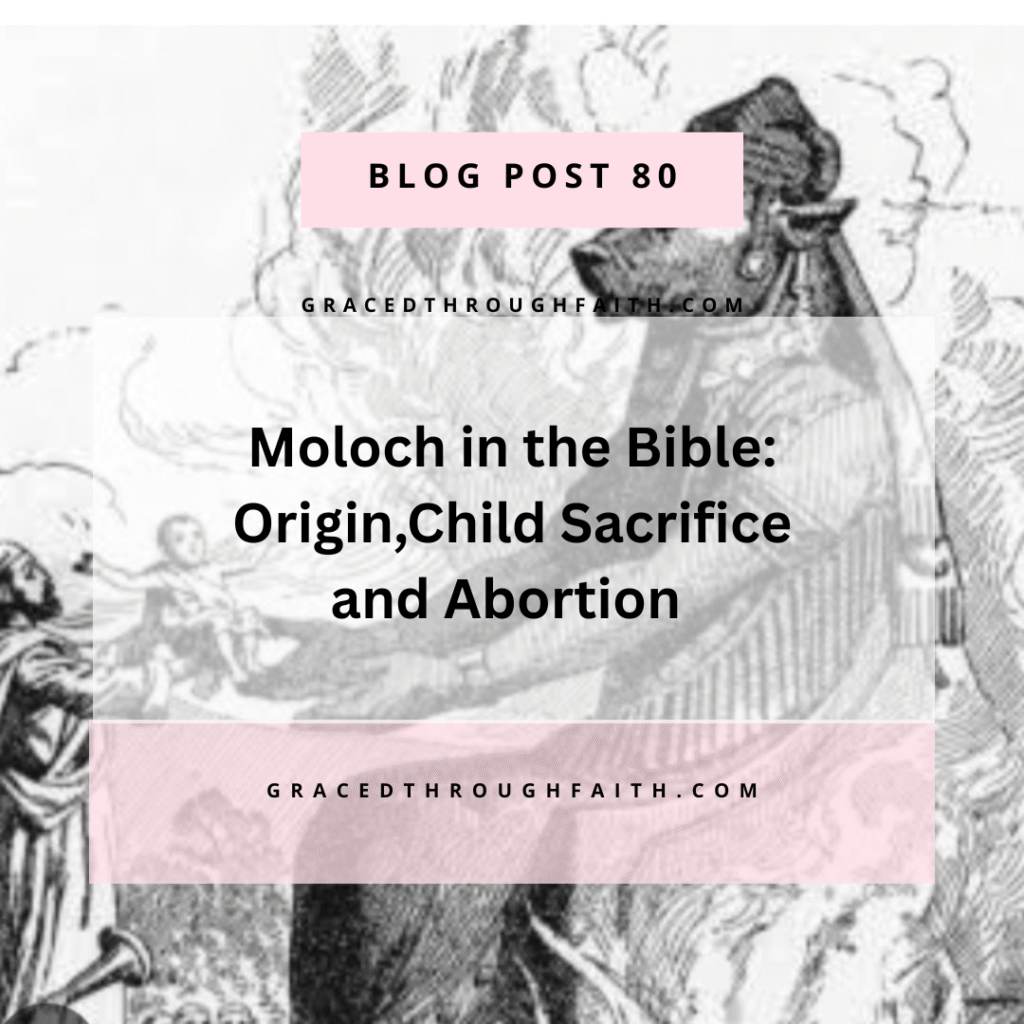
The Dark History of Moloch in the Bible
In the Old Testament, Moloch (or Molech) appears as one of the most disturbing symbols of idolatry and human rebellion. Pagan nations surrounding Israel believed Moloch required the sacrifice of infants, children being placed into fire or killed before being offered.
The Bible strongly condemns this practice in passages such as Leviticus 18:21, Jeremiah 32:35, and 2 Kings 23:10. For ancient Israel, worshipping Moloch was not simply a matter of misguided devotion; it represented a complete departure from the living God, a surrender to forces of spiritual darkness, and an attack on the very image of God expressed in human life.
The biblical writers describe these sacrifices as acts that defile the land, corrupt the people, and invite judgment. The rituals were also understood to involve supernatural influence. The nations believed Moloch promised prosperity or protection in return for the sacrifice of their children.
Scripture reveals these rituals were tied not only to idolatry but to demonic deception. In Psalm 106:37–38, the psalmist David says, “They sacrificed their sons and daughters to false gods… and the land was desecrated by their blood.” This is the lens through which us Christians view the spiritual significance of Moloch’s worship.
Why Christians See a Spiritual Parallel Between Moloch and Modern Abortion
Not a Literal Comparison, But a Spiritual Pattern
Most Christians who draw a connection between abortion and Moloch are not saying abortion is the same as ancient child sacrifice in a physical or cultural sense. Instead, we believe the spiritual patterns are similar: human life is ended, often under pressure, fear, or the belief that doing so will make life easier or more manageable. This echoes the mentality of ancient Moloch worshipers who sought relief, blessing, or stability by sacrificing their children.
From a biblical worldview, life is sacred and given by God from conception (Psalm 139:13–16; Jeremiah 1:5). Because of this, some Christian theologians argue that the intentional ending of unborn life can carry spiritual consequences, even beyond emotional or psychological effects. We see abortion as more than a physical act, it becomes a spiritual crossroads.
The Concept of “Spiritual Legal Rights”
In Christian deliverance teachings, the term “spiritual legal rights” refers to ways a person may open doors that give the enemy influence or “permission” to work in their life. This is not taught as literal legal standing or demonic ownership, but as a metaphor to describe the spiritual footholds Paul writes about in Ephesians 4:27.
When someone participates in an act deeply connected to fear, violence, or the destruction of life, we Christians believe a spiritual doorway is opened, making the person more vulnerable to feelings of oppression, guilt, shame, confusion, or spiritual numbness. Abortion, in this theological interpretation, can become one of those doorways because it touches directly on the value God places on human life.
Many women and men, both Christians and non-Christians, testify that after an abortion, they felt disconnected from God, emotionally fragmented, or spiritually “darkened.” Some describe cycles of self-destructive behaviors, broken relationships, or a persistent sense of inner death. In Christian counseling, these experiences are sometimes understood as the lingering effects of a spiritual breach that hasn’t been healed.
How the “Spirit of Moloch” Is Understood in Theology
When Christians speak of the “spirit of Moloch,” they do not mean the ancient idol literally controls people today. Instead, we refer to the same destructive spiritual influence that tempted ancient people to take innocent life. In this theology, Moloch becomes symbolic of any demonic force that seeks to destroy children, derail families, and distort God’s image in humanity.
Thus, abortion becomes, spiritually speaking, an echo of the same power behind Moloch’s worship: a force that seeks to steal, kill, and destroy (John 10:10). For some Christians, this explains why abortion can feel spiritually heavy or why individuals may experience long-term emotional consequences that go beyond guilt alone.
How Abortion Becomes a Doorway to Spiritual Death (Theologically Speaking)
The Inner Collapse After Taking Innocent Life
Many women and men who have gone through abortion describe a sense that something “died” within them, sometimes immediately, sometimes much later. This may manifest as emotional numbness, inability to bond in relationships, or a deep inner grief that resurfaces unexpectedly. In Christian spiritual terms, this is interpreted as a form of spiritual death, an internal wound where life once existed.
Shame, Guilt, and Emotional Bondage
Shame is one of the most powerful spiritual weapons described in Scripture. After abortion, many experience intense inner condemnation. In Christian theology, shame is viewed as a spiritual chain, an attempt by the enemy to keep a person locked in pain instead of turning to God for healing. This is one way the “spiritual legal right” is used: not as literal demonization, but as a picture of how sin can give darkness a foothold.
Disconnection From God and Calling
Some Christians describe abortion as a point where they lost their spiritual sensitivity, calling, or closeness to God. They may feel unable to pray, worship, or hear from God with the clarity they once had. In pastoral counseling, this is interpreted as the spiritual consequences of grief and wounded identity, not evidence that God abandoned them, but that the heart has shut down in self-condemnation.
How These Doorways Can Be Closed
The central message of Christianity is that no doorway of sin or darkness is permanent. The blood of Jesus closes every spiritual breach. Repentance restores the soul. Confession breaks oppression. Grace rewrites the story. What some ministries call “spiritual legal rights” are completely nullified when a person turns to Christ in honest repentance and faith. God’s forgiveness is immediate, complete, and permanent.
Redemption, Healing, and the Grace of Jesus Christ
The most important truth is that no one is beyond God’s mercy. Women and men who have walked through the pain of abortion can be completely restored. God heals emotional wounds, restores spiritual strength, and brings beauty out of ashes. Scripture promises that God is near to those who are brokenhearted (Psalm 34:18), and Jesus declares freedom for those who feel captive to guilt or despair (Luke 4:18).
Many people find healing through post-abortion ministries, pastoral counselling, prayer, and supportive Christian communities. In Christ, every spiritual door that was opened can be closed. Every shadow can be replaced with light. Every lie can be replaced with truth. The story does not end with brokenness. It ends with redemption.
Also Read: Beelzebub: The Demon, His Influence, and How to Defeat him

[…] Also Read: Moloch in the Bible: Origin, Child Sacrifice and Abortion […]