The Sabbath has always been more than a command, it is a divine rhythm woven into creation itself. It represents God’s heart for His people to step out of the constant motion of life and into a sacred pause where renewal, worship, and peace flourish. Yet for many believers today, questions arise: What does observing the Sabbath mean now that Jesus has come? How can Christians practice meaningful rest in a world that constantly demands more? And what role, if any, do spiritual disciplines like fasting play in nurturing our “spirit man”?
To understand the true practice of the day , we must begin at the very beginning, where God set the pattern for rest.
The Biblical Foundation
Before there was a nation of Israel, before the law of Moses, and long before there were church traditions, God Himself modeled Sabbath rest. In Genesis 2:2–3, Scripture tells us that God completed His creative work on the seventh day and blessed that day, setting it apart as holy. This wasn’t because God was weary, He does not grow tired, but because He was establishing a pattern for humanity. The Sabbath was designed to be a space for restoration, fellowship with God, and reflection on His goodness.
This foundation later became a command for Israel: “Remember the Sabbath day, to keep it holy” (Exodus 20:8). For the Jewish people, it served as a weekly reminder of God as their Creator and their Redeemer, pointing their attention back to His provision and faithfulness. However, even within the law, the Sabbath was never intended to be a heavy burden. Instead, it was meant to be a gracious invitation.
How Jesus Fulfilled the Sabbath
When Jesus entered the scene, He shifted the understanding of the Sabbath in a profound way. He declared Himself “Lord of the Sabbath” (Mark 2:27–28), demonstrating that He had full authority to interpret its meaning. His miracles, teachings, and interactions on the day exposed how the religious leaders had turned a gift into a legalistic system. Jesus made it clear that the Sabbath was intended for man’s benefit, not for man’s bondage.
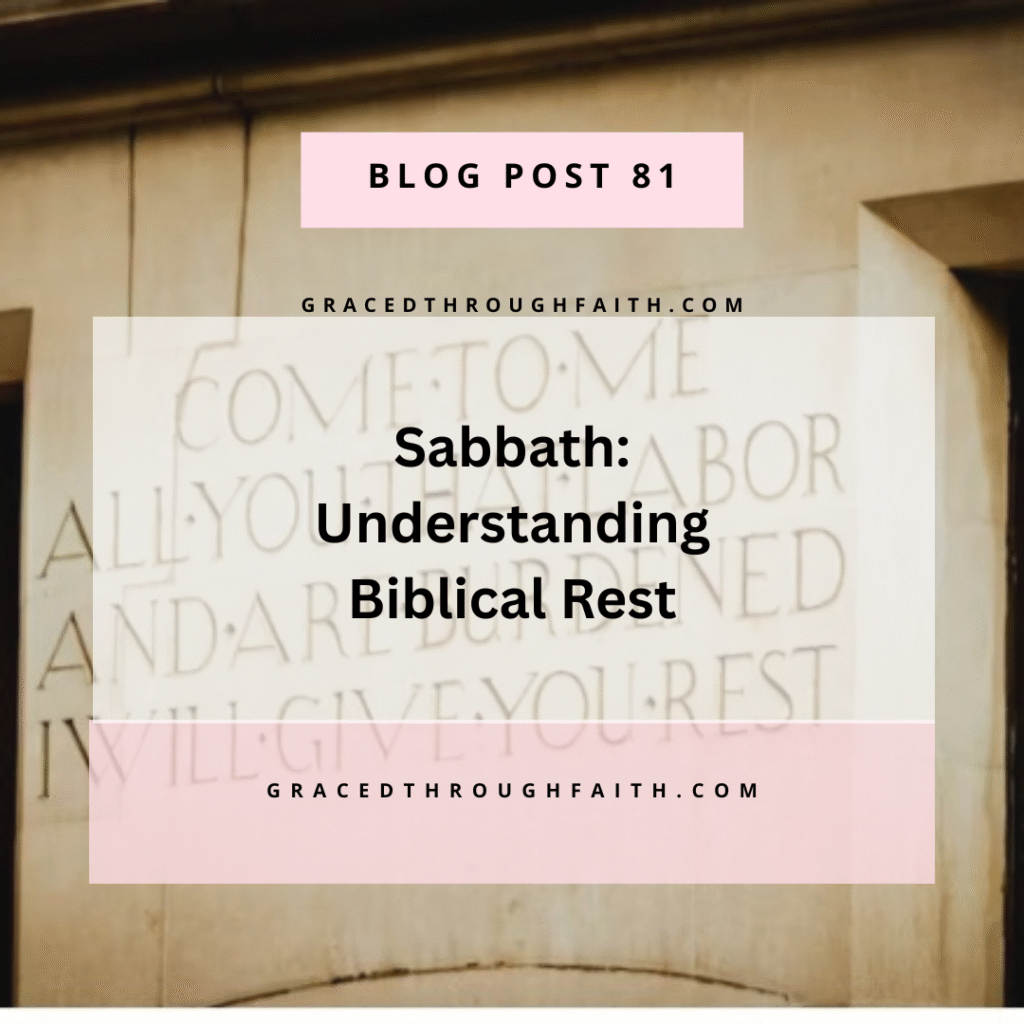
Furthermore, Jesus fulfilled the Sabbath by becoming the very source of rest that the Sabbath pointed toward. He extended a personal invitation: “Come to Me, all who labor and are heavy laden, and I will give you rest” (Matthew 11:28). This rest is not simply physical, it is spiritual, emotional, and eternal. The author of Hebrews affirms that believers now enter a “Sabbath rest” through faith in Christ (Hebrews 4:9–10). What this means is that Jesus is not only the Lord of the Sabbath; He is the fulfillment of its purpose.
The Sabbath was always meant to lead humanity to the true rest found only in Him. While Christians are not bound to observe it according to Old Testament law (Colossians 2:16–17), the principle of regular, intentional rest remains vital and spiritually beneficial.
How Christians Can Practice the Sabbath Today
Though the Old Covenant requirement is fulfilled in Christ, many believers hunger for deeper spiritual renewal, something Sabbath rhythms naturally provide. Practicing a Christian Sabbath is not about rules but about relationship. It becomes a sacred time where we intentionally step away from noise and step into the presence of God.
Many Christians choose a day or part of a day each week to slow down and focus on Jesus. This may involve setting aside work, silencing digital distractions, and creating space for prayer, worship, and Scripture meditation. Others choose to devote the time to peaceful family fellowship, time in nature, journaling, or simply resting in a way that restores their soul. The goal is not restriction; it is renewal.
What matters is not the specific day or timeframe but the heart posture, choosing to honor God by resting in Him, remembering His faithfulness, and allowing Him to refresh the spirit.
The Role of Fasting in Sabbath Renewal (Optional but Powerful)
Some Christians also incorporate fasting into their day of renewal. Fasting has long been a spiritual discipline that sharpens focus, humbles the heart, and awakens deeper dependence on God. When paired with Sabbath rest, fasting can help quiet the physical and emotional noise that often competes with spiritual clarity.
However, it is important to emphasize that fasting is not a requirement for Sabbath practice. It is an optional discipline that can bless the believer, but it should never become a burden or obligation. Fasting is most beneficial when done willingly, prayerfully, and with the purpose of drawing nearer to Jesus.
For those who choose to fast, even a short or partial fast can create a space for the Holy Spirit to renew the mind and spirit. But whether a believer fasts or simply rests, the heart of the Sabbath remains the same: to delight in the Lord and receive His restorative grace.
Resting in Christ
Ultimately, Sabbath is not only a day, it is a lifestyle shaped by the presence of Jesus. When believers intentionally create room for rest, reflection, and worship, they remind themselves that they are not defined by productivity but by identity in Christ. It teaches us to trust God with what we cannot control, to slow down enough to hear His voice, and to receive His peace in the deepest places of the soul.
By embracing spiritual rhythms, whether through intentional rest, worship, Scripture meditation, quiet reflection, or optional fasting, we align ourselves with the gift God established at creation and fulfilled through His Son Jesus Christ. Sabbath becomes not a ritual but a relationship, not a law but a grace-filled invitation.
In a hurried, restless world, the Sabbath calls us back to the One who is rest Himself.

Leave a Reply